
 By Car gamerewardz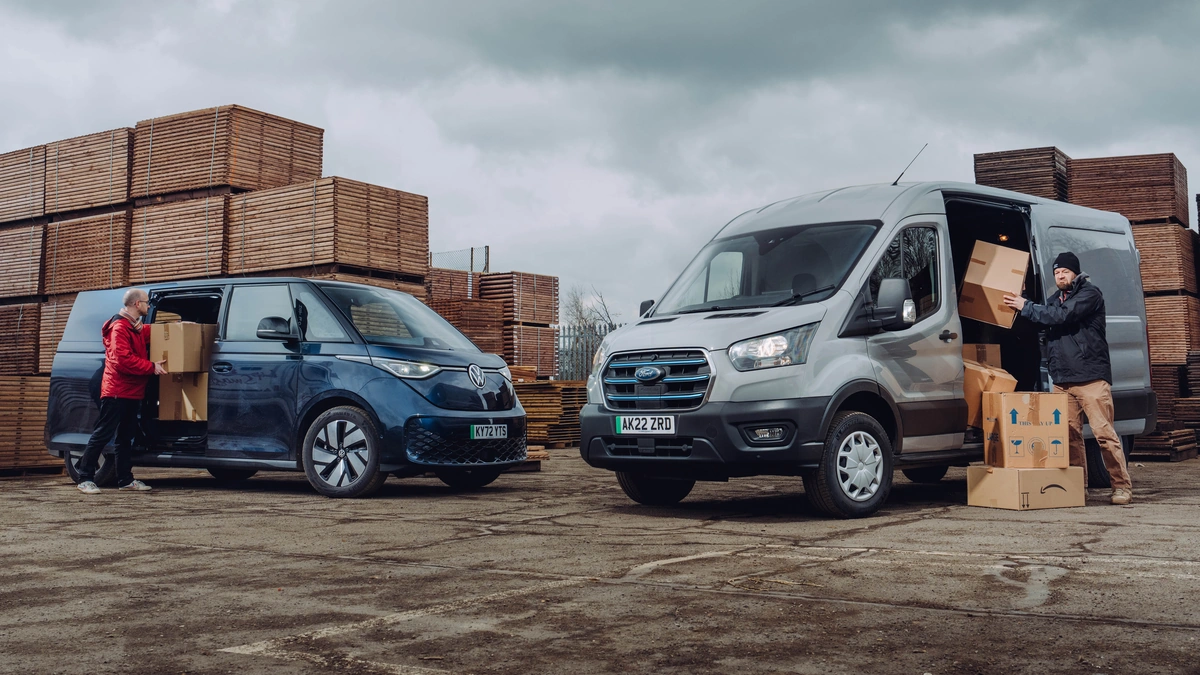
Alright, let’s grab a coffee and talk about something genuinely fascinating, and frankly, a bit misunderstood: the electric cargo vans range comparison Europe. If you’re a fleet manager, a logistics professional, or just someone keen on the future of urban transport, you’ve probably seen those shiny brochures with impressive range figures forEV commercial vehicles. But here’s the thing: those numbers, while helpful, often tell only half the story. What really matters is why those figures fluctuate so wildly in the real world and what that means for your business operating across the diverse landscapes of Europe. It’s not just about how far a van can go; it’s about how far it needs to go, consistently, day in and day out, without breaking a sweat (or a schedule).
I initially thought this was straightforward more range equals better, right? But then I realized the intricate dance between technology, infrastructure, regulation, and the sheer operational demands of last-mile delivery in bustling European cities. It’s a complex puzzle, and understanding the nuances of electric cargo vans in this context is crucial for making smart, future-proof decisions. Let me rephrase that for clarity: focusing solely on the stated range is like judging a book by its cover. We need to dive deeper into the chapters.
Beyond the Brochure | Why European Range Figures Tell Only Half the Story
When you look at the official range figures for electric cargo vans in Europe, you’re usually seeing a WLTP (Worldwide Harmonised Light Vehicle Test Procedure) rating. This is a standardized test, which is great for comparisons on paper. But let’s be honest, real life isn’t a test track. Factors like payload, driving style, ambient temperature, topography (think Alps vs. Dutch flats!), and auxiliary power use (heating, cooling, infotainment) can dramatically impact actual range. A van loaded to its maximum payload capacity electric vans will drain its battery faster than an empty one. Common sense, right? Yet, it’s often overlooked in initial calculations.
What fascinates me is how quickly these variables add up. A typical delivery route in, say, hilly Lisbon, with frequent stops and starts, will yield a vastly different range than a similar distance covered on an open highway in Germany. This is where the true expertise comes in: understanding your specific operational profile. Are your drivers heavy-footed? Do they spend hours idling with the heating on during winter? These aren’t minor details; they’re critical components of your effective electric cargo vans range comparison Europe strategy. And let’s not forget the rapid advancements in battery technology electric vans, which are constantly pushing these boundaries, making today’s benchmark tomorrow’s baseline.
The Urban Maze & Last-Mile Delivery | Where Range Truly Counts (or Doesn’t)
For most European businesses, the primary role of an electric cargo van is last-mile delivery. This means navigating dense urban environments, making multiple stops, and often dealing with stop-and-go traffic. In this scenario, extreme long-range capabilities might actually be overkill. What’s more important is consistent, reliable range that covers a full shift, coupled with efficient charging opportunities. Think about it: a van might only cover 100-150 km in a day, but if it can do that reliably, day in, day out, without range anxiety, that’s a win.
The beauty of EV commercial vehicles Europe in this context is their zero-emission footprint, which is becoming increasingly vital as more European cities implement Ultra Low Emission Zones (ULEZ) or even outright bans on internal combustion engine vehicles. This is where the ‘why’ really shines through – it’s not just about saving fuel, it’s about market access and future-proofing your business. Speaking of diverse vehicle needs, it’s interesting how different markets prioritize different attributes. While some are focused on the practicalities of a cargo van, others might be looking for something with a bit more flair, likecoupe cars under 1 crore, showcasing the vast spectrum of automotive demands.
Powering Up | Europe’s Charging Infrastructure & Its Range Implications
Range is only as good as the electric van charging infrastructure supporting it. Europe is making significant strides, but the landscape is uneven. While countries like Norway and the Netherlands boast extensive public charging networks, others are still playing catch-up. For fleet operators, depot charging is often the backbone – ensuring vans are topped up overnight. But what about opportunistic charging during the day?
This is where understanding European regulations electric vehicles becomes paramount. Policies promoting public charging, incentives for private charging infrastructure, and grid stability all play a role. For example, the European Union’s Alternative Fuels Infrastructure Regulation (AFIR) aims to ensure sufficient public charging points, which directly impacts the practical utility of any given electric cargo vans range comparison Europe. If a van has a 300 km range but can only charge slowly or intermittently on its route, that theoretical range becomes far less useful. According to theEuropean Environment Agency, the number of public charging points has been steadily increasing, but distribution and speed remain key challenges.
The Long Haul (or Not) | What About Longer Routes?
Now, what if your operations aren’t purely urban last-mile delivery? What if your electric cargo vans need to cover longer inter-city routes? This is where range anxiety can genuinely kick in. While some manufacturers are pushing out models with ranges exceeding 400 km, these often come with a higher price tag and might necessitate larger, heavier batteries, potentially impacting payload capacity electric vans. The key here is not to chase the highest number, but the optimal number for your specific routes.
This brings us to the total cost of ownership (TCO) electric vans. A van with a super-long range might be more expensive upfront, but if it allows you to complete routes with fewer charges, it could save time and operational costs in the long run. Conversely, a cheaper, shorter-range van might be perfect for urban loops if your charging strategy is robust. It’s a delicate balance, and sometimes, even in the world of commercial vehicles, you find surprising parallels in consumer choices. For instance, just like some might seekcheap 2-door coupe cars USA under $30000for niche personal use, businesses also seek the ‘right fit’ for their specific, often niche, operational needs.
The Road Ahead | Navigating the Future of Emission-Free Logistics
The future of emission-free logistics in Europe is undeniably electric. The market for electric cargo vans is booming, with new models and improved battery technology electric vans constantly emerging. But as an analyst, I’d say the real game-changer isn’t just bigger batteries, but smarter energy management, more robust electric van charging infrastructure, and a deeper understanding of real-world operational demands. The shift towards urban transport electrification isn’t just a trend; it’s a fundamental change in how goods move.
Businesses that embrace this change, not just by buying EVs, but by strategically planning their fleets, charging, and routes, will be the ones that thrive. The electric cargo vans range comparison Europe isn’t a static chart; it’s a dynamic landscape shaped by innovation, policy, and practical application. So, don’t just look at the range; look at the entire ecosystem. That’s where the true value lies.
Frequently Asked Questions About Electric Cargo Van Range in Europe
What is WLTP range and how does it compare to real-world driving?
WLTP (Worldwide Harmonised Light Vehicle Test Procedure) is a standardized laboratory test that provides a comparable range figure for electric vehicles. In real-world driving, factors like payload, driving style, temperature, and terrain can significantly reduce the actual range compared to the official WLTP rating.
Do colder temperatures affect electric cargo van range?
Yes, colder temperatures can notably reduce the range of electric cargo vans. Batteries are less efficient in the cold, and more energy is used for cabin heating, impacting the overall available range for driving.
Is a higher range always better for electric cargo vans?
Not necessarily. While more range offers flexibility, it often comes with a higher purchase price and potentially heavier batteries, which can reduce payload capacity. For last-mile delivery in urban areas, a moderate, reliable range with efficient charging might be more cost-effective and practical.
How important is charging infrastructure for maximizing electric van range?
Extremely important. Even a van with a long theoretical range will be limited if there isn’t adequate and accessible electric van charging infrastructure along its routes or at its depot. Fast, reliable charging points are crucial for operational efficiency.
What role do European regulations play in electric cargo van adoption?
European regulations electric vehicles play a massive role. Policies like emission zones in cities, government incentives for EV purchases, and mandates for charging infrastructure are key drivers encouraging businesses to transition to electric cargo vans and influencing market development.
How does payload affect the range of an electric cargo van?
Payload has a direct and significant impact on range. The heavier the load an electric cargo van carries, the more energy is required to move it, thus reducing the overall driving range. Fleet managers must consider typical load weights when evaluating suitable EV models.