
 By Car gamerewardz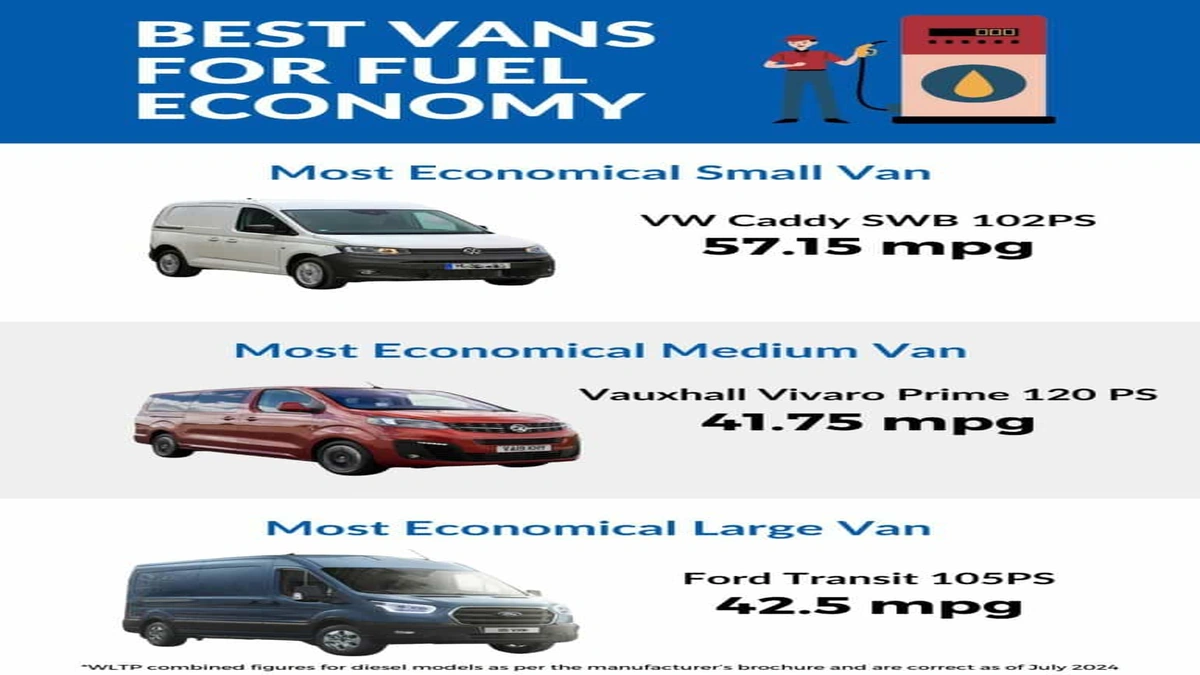
Alright, let’s talk vans. Specifically, diesel vans UK fuel efficiency comparison . Now, I know what you’re probably thinking: “Just tell me which one gets the best MPG, and I’m good to go.” But here’s the thing, and this is where it gets interesting: simply looking at a manufacturer’s stated miles per gallon (MPG) figure is like judging a book by its cover. It tells you a tiny piece of the story, but it misses the entire plot twist, the character development, and the long-term implications that truly matter for your business, your wallet, and frankly, your sanity.
As someone who’s spent a fair bit of time looking under the bonnet of the UK commercial vehicle market, I’ve seen firsthand how a seemingly small difference in fuel efficiency can snowball into significant savings – or crippling costs – over the lifespan of a van. It’s not just about what you pay at the pump today; it’s about the bigger picture: the total commercial vehicle running costs , the environmental impact, and the future value of your asset. So, let’s dive deep, shall we? Because choosing the right diesel van isn’t just a purchase; it’s a strategic business decision.
Beyond the Pump | Understanding True Commercial Vehicle Running Costs

When you’re running a business, every penny counts. And for many UK enterprises, vans are the lifeblood. Delivery services, tradespeople, couriers – you name it. Your van isn’t just transport; it’s a mobile office, a workshop, and a vital part of your brand. So, when we talk about van fuel economy , we’re not just talking about the diesel you pour in. We’re talking about how that fuel consumption affects everything else.
Think about it: higher fuel consumption means more frequent trips to the fuel station, which eats into your valuable working hours. It means a larger carbon footprint, which is becoming increasingly important for businesses looking to demonstrate environmental responsibility. And crucially, it impacts your total cost of ownership. While the initial purchase price is a big factor, don’t overlook depreciation, insurance, servicing, and yes, fuel. A van that’s cheap to buy but guzzles fuel like there’s no tomorrow could end up being far more expensive in the long run than a slightly pricier, more efficient model. It’s a common mistake I see people make, focusing solely on the upfront cost. But trust me, the smart money is on understanding the whole lifecycle cost.
The MPG Myth | What Really Drives Diesel Van Fuel Economy
Let’s be honest, those glossy brochures with their impressive MPG figures? They’re often achieved under laboratory conditions. In the real world, things are a bit… messier. Your actual diesel van MPG will depend on a multitude of factors that are rarely mentioned in the spec sheet. Are you mostly doing urban stop-start driving? Or long, steady motorway runs? What kind of payload are you typically carrying? How heavy is your right foot?
I’ve seen drivers with identical vans get wildly different fuel consumption figures purely based on their driving style. Aggressive acceleration and braking are absolute killers for efficiency. Then there’s the load factor; a fully laden van will naturally work harder and consume more fuel than an empty one. Even aerodynamics play a role, especially at higher speeds. So, when you’re looking for the best MPG vans UK , it’s essential to consider your typical usage patterns. What works for a long-distance courier might not be the most economical choice for a city-based electrician. This nuance is often overlooked, but it’s critical for true fuel-efficient diesel vans decision-making.
Top Contenders | A Deep Dive into Fuel-Efficient Diesel Vans in the UK
Okay, so now that we’ve set the stage, let’s talk about some of the usual suspects and a few dark horses in the best diesel vans UK fuel efficiency comparison . It’s a competitive market, and manufacturers are constantly innovating to squeeze more miles out of every litre.
Ford Transit Custom
The Transit Custom is, for many, the default choice in the UK, and for good reason. Its EcoBlue diesel engines are generally robust and offer respectable fuel economy. Ford has put a lot of effort into making these engines efficient, and it shows. Real-world figures tend to be pretty close to the advertised, especially on longer runs. It’s a solid all-rounder for many businesses.
Vauxhall Vivaro / Peugeot Expert / Citroën Dispatch (and Toyota Proace)
These vans are essentially siblings under the Stellantis (formerly PSA Group) umbrella, sharing platforms and engines. Their 1.5L and 2.0L diesel engines are known for being particularly frugal. If you’re looking for excellent diesel van comparison figures in the medium-sized segment, these are definitely worth a very close look. They often surprise people with their low running costs.
Mercedes-Benz Sprinter
While often seen as a premium option, the Sprinter’s larger engines are surprisingly efficient for its size, especially the newer generations with their advanced diesel technology. If you need serious payload and volume, and you’re covering significant mileage, the Sprinter can offer a compelling package in terms of long-distance van fuel economy , even if the initial outlay is higher. Mercedes’ reputation for reliability also plays into the overall value proposition.
Volkswagen Transporter
Another popular choice, the Transporter offers a refined driving experience and strong residual values. Its TDI engines are well-regarded for their balance of power and efficiency. While perhaps not always topping the absolute MPG charts, its overall package, including reliability and driver comfort, makes it a strong contender for many businesses.
Renault Trafic / Nissan Primastar / Fiat Talento (older models)
These are also platform-sharing vans, offering decent efficiency and practicality. The engines are generally proven workhorses. While newer models from other brands might edge them out on paper for pure MPG, their competitive pricing and solid performance make them attractive, particularly if you’re exploring the used diesel vans fuel consumption market.
Remember, the key here is to look beyond just the number. Consider the engine size, the gearbox (manuals often offer slightly better economy than automatics for a skilled driver, but automatics are improving rapidly), and the overall package. What good is a van with amazing MPG if it can’t carry your tools or breaks down constantly? It’s about finding that sweet spot.
The Future-Proof Van | Emissions, Regulations, and Your Business Van Efficiency
The landscape for diesel vehicles in the UK is constantly evolving. We’re seeing more and more Clean Air Zones (CAZs) and Ultra Low Emission Zones (ULEZ), with zones like London’s ULEZ becoming more prevalent (you can check specifics on the official UK government website ), which can levy charges on older, more polluting vehicles. This isn’t just an environmental concern; it’s a financial one for businesses.
Choosing a van with excellent fuel efficiency often goes hand-in-hand with lower emissions, making it more likely to meet Euro 6 standards or newer, thus avoiding these charges. This is a critical consideration for business van efficiency in the long term. Investing in a cleaner, more efficient diesel van now can future-proof your operations and save you a significant amount in daily charges. It’s not just about today’s fuel costs, but tomorrow’s regulatory compliance. Ignoring this aspect is, quite frankly, a gamble.
While electric vans are gaining traction, for many businesses, especially those needing long ranges, heavy payloads, or rapid refuelling, diesel remains the practical choice. But that doesn’t mean you can ignore emissions. The best diesel vans are those that balance robust performance with minimal environmental impact and optimal UK van running costs .
Making the Smart Choice | Navigating the UK Van Market Trends
So, how do you make the ultimate decision? It’s a blend of research, understanding your specific needs, and a bit of crystal-ball gazing into future market conditions. For instance, while some might dream of a luxury coupe car for weekend escapes, your business needs a workhorse. It’s crucial to differentiate between personal desires and commercial necessities. And remember, imagine you’re weighing up a new van against perhaps a sleek new sedan under 30000 USA for personal use – the criteria are vastly different.
When looking at the UK van market trends , consider whether buying new or used makes more sense. A newer van will generally offer better efficiency and lower emissions, but with a higher initial price tag. A well-maintained used van can be a fantastic economical choice, but you need to be diligent about checking its service history and actual van ownership costs . Always check independent reviews and real-world tests, or even consult independent reviews from reputable sources like What Van? to get a clearer picture.
Don’t forget to factor in warranty, servicing packages, and potential resale value. An economical van isn’t just one that sips fuel; it’s one that holds its value, costs less to maintain, and keeps your business moving without unexpected headaches. This holistic view is what truly defines an economical vans UK choice.
Frequently Asked Questions About Diesel Van Fuel Efficiency
How accurate are manufacturer MPG figures for diesel vans?
Manufacturer MPG figures are typically achieved under controlled laboratory conditions using standardized tests (like WLTP). While they provide a baseline for comparison, real-world fuel economy can vary significantly due to factors like driving style, load, road conditions, and maintenance. Expect real-world figures to be 10-20% lower than advertised, sometimes more.
Does loading a van significantly impact its fuel efficiency?
Absolutely. A heavier load requires the engine to work harder, directly increasing fuel consumption. The impact can be substantial, with a fully laden van often seeing a noticeable drop in MPG compared to an empty one. Proper load distribution can help mitigate some of this, but the weight itself is the primary factor.
Are there any grants or incentives for buying fuel-efficient vans in the UK?
While specific grants for diesel vans are becoming less common due to the push towards electric vehicles, you might find some regional or local incentives related to cleaner air zones. The UK government’s Plug-in Van Grant (PiVG) primarily targets electric vans. Always check the latest government guidelines and local authority schemes for the most up-to-date information.
What’s the typical lifespan of a fuel-efficient diesel van engine?
With proper maintenance and regular servicing, a modern diesel van engine can easily last for 200,000 to 300,000 miles, and often much more. Factors like consistent oil changes, timely filter replacements, and avoiding excessive short journeys (which can clog DPFs) significantly contribute to engine longevity. The efficiency components are designed to last the life of the engine if cared for.
How do I calculate my real-world van fuel economy?
The simplest way is the ‘fill-up’ method. Fill your tank completely, note your odometer reading. Drive as usual. Next time you fill up, note the litres (or gallons) added and the new odometer reading. Subtract the initial odometer reading from the new one to get miles driven, then divide miles by litres/gallons used. Repeat this over several fill-ups for a more accurate average. Many modern vans also have onboard computers that provide real-time and average MPG figures, which can be a good guide.
So, there you have it. The world of best diesel vans UK fuel efficiency comparison isn’t just about a number; it’s about strategy, foresight, and understanding the true mechanics of your business’s mobility. Make an informed decision, and you’ll not only save money at the pump but also drive your business forward with confidence. Happy vanning!