
 By Car gamerewardz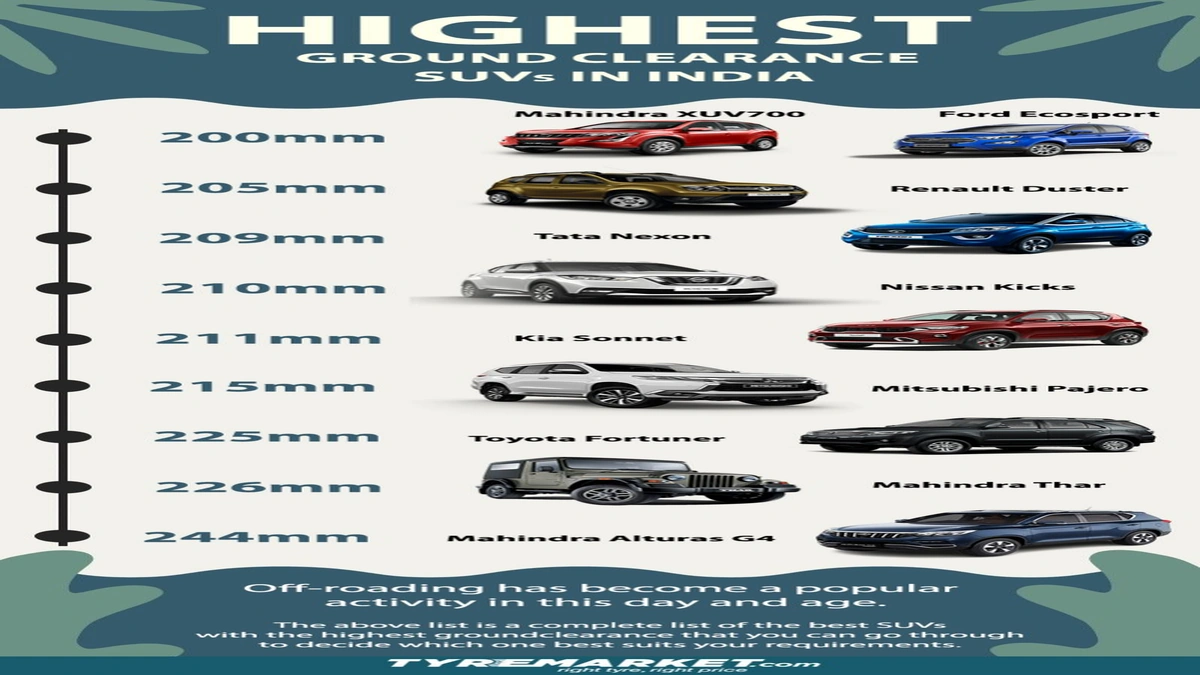
Alright, let’s talk about something that often gets overlooked when you’re drooling over a shiny newSUV: ground clearance. Most folks, when they hear “ground clearance,” immediately picture rugged off-road adventures, rock crawling, and mud-splattering glory. And yes, for those extreme scenarios, it’s absolutely critical. But here’s the thing, the real “why” behind understanding your SUV ground clearance comparison USA goes far deeper than just hitting the trails. It impacts your daily commute, your safety in diverse weather, and even the longevity of your vehicle. What fascinates me is how many drivers in the USA don’t truly grasp its everyday importance.
I initially thought this was straightforward – higher is better, right? Not always. As I delved deeper, I realized it’s a nuanced balance. We’re not just talking about inches here; we’re talking about protection, capability, and peace of mind, whether you’re navigating urban jungles or heading to a snowy mountain cabin. Let me rephrase that for clarity: your SUV’s ground clearance isn’t just a spec sheet number; it’s a fundamental aspect of its design that dictates its real-world utility.
Beyond the Trail | Urban Obstacles and Daily Driving Realities
Let’s be honest, most SUVs in the USA spend 90% of their lives on paved roads, not dirt tracks. So, why does ground clearance still matter? Think about it: potholes. Oh, the glorious, car-swallowing potholes that magically appear after every winter or heavy rain. A lower-slung vehicle might scrape its undercarriage, oil pan, or exhaust system, leading to costly repairs. This is where even a slightly higher urban SUV ground clearance can save you a world of headache.
Then there are those pesky speed bumps – some designed with the subtlety of a mountain range. Or perhaps you’re pulling into a friend’s steep driveway, or navigating an unpaved parking lot at a rural event. These aren’t “off-roading”; these are everyday scenarios where insufficient ground clearance can cause damage. We’ve all seen cars high-centered on something seemingly innocuous. The ability of SUVs to clear these common obstacles without a second thought is a major reason for their popularity in the USA, offering a practical advantage for daily driving challenges.
The Numbers Game | Understanding SUV Ground Clearance Metrics
So, what exactly is ground clearance? Simply put, it’s the shortest distance between the ground and the lowest part of your vehicle’s undercarriage (excluding the tires). For most SUVs, this measurement typically ranges from around 6 inches for smaller, car-based crossovers to over 10 inches for serious off-road SUV ground clearance machines. A common mistake I see people make is only looking at this single number, but there’s more to it.
True off-road capability isn’t just about static ground clearance. You also need to consider approach, departure, and breakover angles. The approach angle tells you how steep an incline your SUV can climb without scraping its front bumper. The departure angle is for the rear, and the breakover angle indicates how steep a crest you can clear without high-centering. These angles, alongside the overall ground clearance, paint a more complete picture of an SUV’s agility over varied terrain. For instance, a vehicle with a fantastic average SUV ground clearance might still struggle if its overhangs are too long.
Weathering the Storm | Ground Clearance for USA’s Diverse Climates
The USA is a land of incredible climatic diversity. From the heavy snowfalls in the Northeast and Midwest to flash floods in the South and dust storms in the Southwest, your vehicle needs to be prepared. This is where high ground clearance SUVs truly shine. When snow accumulates, even a few inches can become a significant obstacle for lower vehicles, causing them to plow through it, potentially damaging underbody components or getting stuck. A higher stance allows the SUV to ride above the snow, maintaining traction and momentum.
Similarly, during heavy rain, urban drainage systems can struggle, leading to localized flooding. While you should never drive through deep water, a higher ground clearance can provide an extra margin of safety, reducing the risk of water entering critical engine components or electrical systems. This aspect of an SUV’s ground clearance is less about extreme adventures and more about practical resilience in challenging winter conditions and unpredictable weather events that are common across the USA.
The Ground Clearance Sweet Spot | Finding Your Perfect Match
Choosing the right ground clearance for your needs means balancing capability with other factors. While more ground clearance generally means better obstacle avoidance, it can also raise the vehicle’s center of gravity, potentially impacting vehicle stability and handling on paved roads. This is especially true for those considering significant suspension lift kits without proper engineering. For a family SUV, you might prioritize a comfortable ride and stable handling over extreme off-road capability.
Consider your typical driving environment. Are you in a city with notoriously bad roads? Do you frequent unpaved campsites? Do you live in an area prone to heavy snow? Answering these questions will guide you. Many modern SUVs offer adaptive suspension systems that can adjust ride height, providing the best of both worlds – lower for highway cruising and higher when needed. It’s about finding that personal sweet spot, not just chasing the highest number. For example, while ahatchbackmight excel in city parking, its ground clearance limitations are clear when faced with rough terrain.
When you’re looking at SUV ground clearance comparison USA data, remember to think beyond the marketing. Look for real-world reviews, consider how the approach angle and departure angle play into the vehicle’s overall design, and assess whether the vehicle’s inherent suspension setup aligns with your driving style and anticipated challenges.
FAQ | Your Ground Clearance Questions Answered
Is more ground clearance always better for an SUV in the USA?
Not necessarily. While higher ground clearance offers better obstacle avoidance and off-road capability, it can sometimes lead to a higher center of gravity, which might slightly reduce on-road handling and stability. The ideal amount depends on your specific driving needs and priorities.
How does AWD vs 4WD affect ground clearance?
AWD (All-Wheel Drive) and 4WD (Four-Wheel Drive) systems primarily affect traction, not static ground clearance. However, vehicles designed with advanced 4WD systems often come with higher ground clearance and more robust suspension components from the factory, as they are intended for more challenging terrains.
Can I increase my SUV’s ground clearance?
Yes, you can. Common methods include installing larger tires (within safe limits) or using suspension lift kits. However, modifications should be done by professionals, as they can impact ride quality, handling, fuel economy, and even warranty coverage. Always research thoroughly.
What’s a good ground clearance for a family SUV?
For a typical family SUV used for daily driving and occasional light off-roading or snowy conditions, a ground clearance between 7 to 9 inches is generally considered good. This provides ample protection against common obstacles without overly compromising on-road dynamics.
Where can I find SUV ground clearance comparison data for specific models?
Reputable automotive review sites like Edmunds, Car and Driver, and Kelley Blue Book often provide detailed specifications, including ground clearance, for various SUVs. You can also check the manufacturer’s official website or owner’s manual for precise figures. For a general understanding of ground clearance,Wikipedia offers a good starting point.
So, the next time you’re eyeing an SUV, or even just driving your current one, take a moment to appreciate what’s happening beneath your feet. The ground clearance isn’t just an afterthought; it’s a silent guardian, a crucial determinant of your vehicle’s true capability and your peace of mind on the diverse roads of the USA. Understanding this deeper “why” allows you to make more informed decisions, ensuring your SUV is truly fit for purpose, not just for show.